Property Selling Advice Croydon & Surrounds | Dave & Jas

Not Every Property Should Launch the Same Way
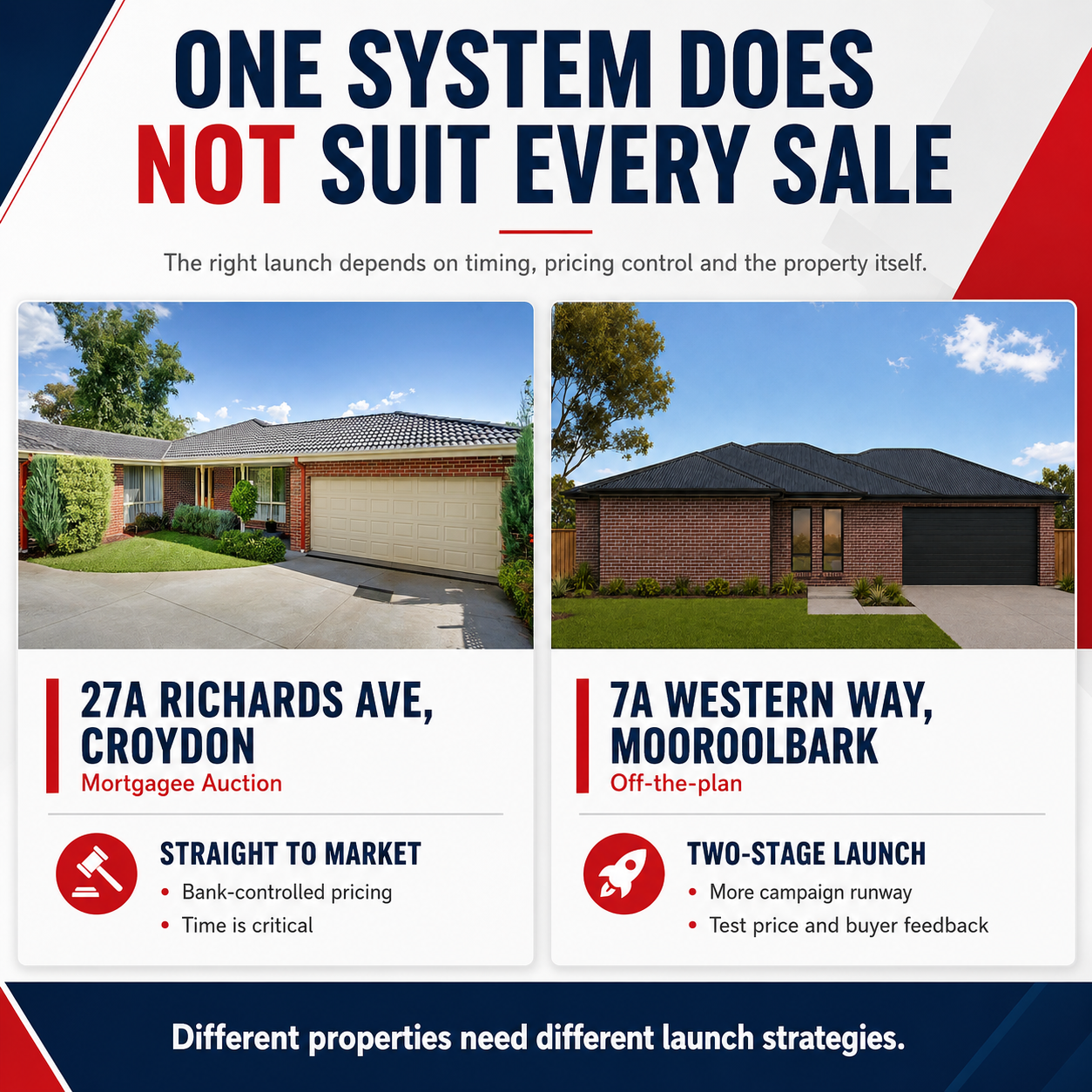
ONE SYSTEM DOES NOT SUIT EVERY SALE
The Situation
Two properties can enter the market at the same time and require completely different launch strategies.
27A Richards Avenue, Croydon is a mortgagee auction. Pricing and valuation are controlled by the mortgagee, and time is critical. The campaign therefore needs immediate exposure through the major property portals.
7A Western Way, Mooroolbark is an off-the-plan sale with considerably more campaign runway. This creates an opportunity to begin with website, social media, database marketing and buyer feedback before committing to the full public launch.
Why the Strategies Are Different
At Richards Avenue, there is little value in delaying the wider campaign.
The pricing process is handled by the mortgagee, the sale method is established and the objective is to reach the broadest possible buyer audience quickly.
The appropriate approach is:
- professional photography
- immediate major-portal exposure
- auction campaign
- broad buyer promotion
- no preliminary testing period
Western Way presents a different set of circumstances.
The property is still being completed, the owners have more time and early buyer feedback may help refine the pricing, positioning and campaign message.
The appropriate approach is:
- website and social media exposure first
- database and buyer matching
- early enquiry and feedback
- campaign refinement
- major-portal launch when the property and strategy are ready
The Key Learning
Two-Stage Selling is not a rigid formula that should be forced onto every property.
It is one available strategy.
Some properties benefit from early market testing and a controlled launch. Others require immediate exposure and should go directly to the major portals.
The correct question is not:
Which selling system do we always use?
The correct question is:
Which launch strategy best suits this property, this owner and these circumstances?
For Sellers
A good selling strategy should consider:
- timing
- ownership circumstances
- who controls pricing
- the type and condition of the property
- the amount of campaign runway available
- whether early buyer feedback would improve the final launch
Sometimes the right decision is to launch immediately.
The important thing is that the decision is deliberate.
Key Learning
Strategy first. Method second.
Different properties need different launch strategies, because one system does not suit every sale.
When a Price Range Has Done Its Job
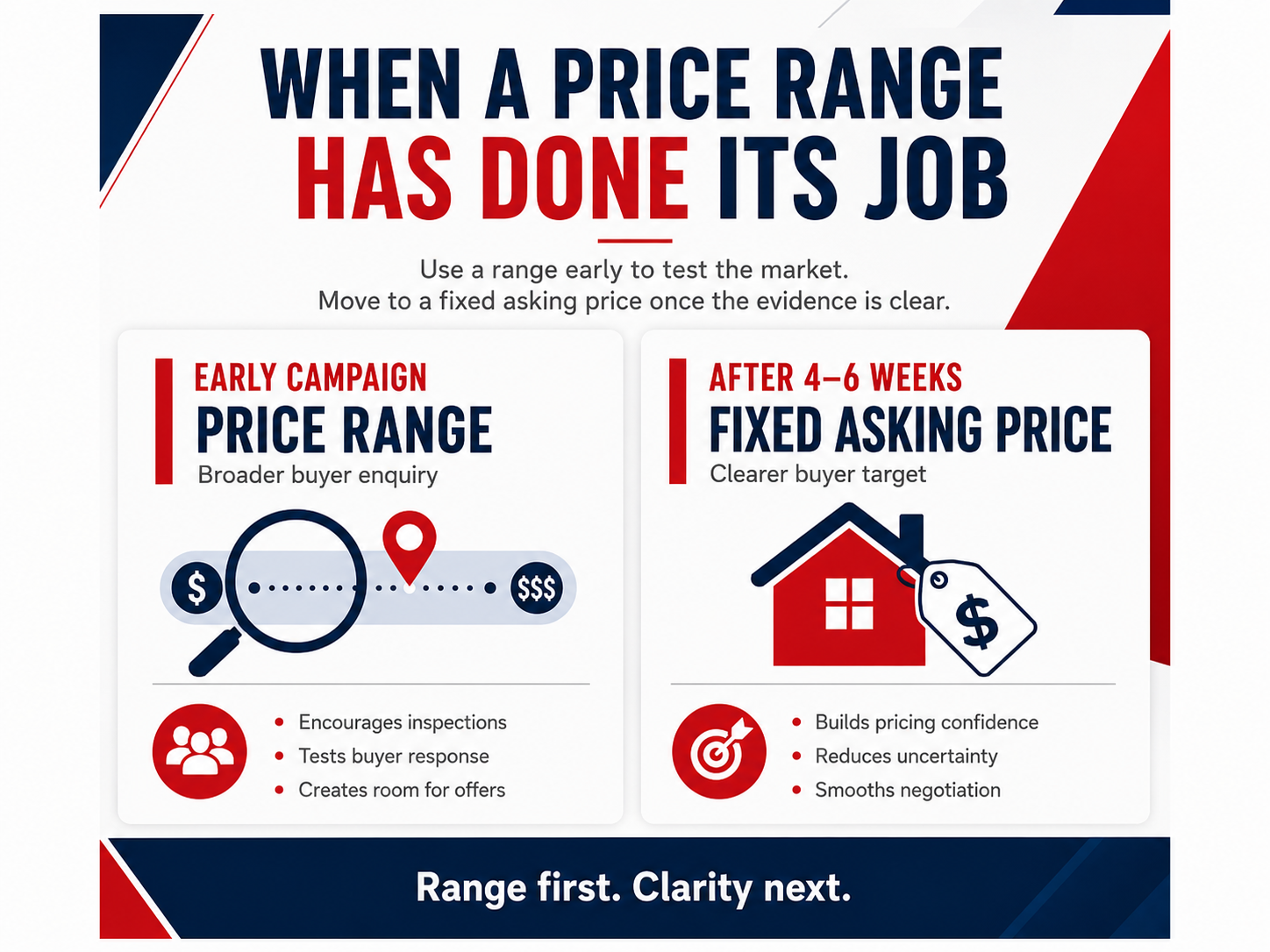
RANGE FIRST. FIXED PRICE WHEN THE MARKET HAS SPOKEN.
A realistic price range can be an effective way to launch a private-sale campaign.
Early in the campaign, we are still learning:
- how strongly buyers will respond;
- where they see value;
- where resistance begins;
- whether competition will emerge;
- which price point generates genuine enquiry.
At this stage, the range acts as a discovery tool. It encourages inspections, allows room for offers and helps the market begin the conversation.
Why the Strategy May Need to Change
If the property has not sold after approximately four to six weeks, we should know far more than we did at launch.
By then, we have evidence from:
- enquiry levels;
- inspection attendance;
- repeat visits;
- offers;
- buyer feedback;
- competing properties;
- price resistance.
At that point, leaving the same range in place indefinitely can create uncertainty.
Buyers may begin asking:
- What do the owners actually want?
- Is the bottom of the range realistic?
- What would be considered a serious offer?
- Should I act now or wait for a price change?
Every unanswered question adds friction.
Why a Fixed Asking Price Can Help
Once the market has provided enough evidence, a fixed asking price can give buyers a clearer target.
It can provide:
- greater confidence;
- clearer seller expectations;
- a simpler starting point for negotiation;
- easier comparison with competing properties;
- a smoother path from enquiry to decision.
Buyers do not need every ounce of flexibility removed.
They need to understand what they are aiming for.
This Is Not Giving Up
Moving from a range to a fixed asking price does not mean the campaign has failed.
It means the first pricing method has completed its job.
The range helped attract buyers, test demand and gather feedback.
The fixed asking price uses that evidence to make the next stage clearer.
The strategy moves from discovery to decision.
The Fixed Price Must Still Be Realistic
A fixed asking price should reflect the evidence gathered during the campaign.
That includes:
- buyer feedback;
- offers;
- comparable sales;
- competing listings;
- enquiry levels.
Clarity only works when the price itself is credible.
The Key Learning
A price range is useful while the market is still teaching us where the property sits.
Once enough evidence has been gathered, clarity can become more valuable than flexibility.
The range helps discover the market.
The fixed asking price helps the next buyer act.
Range first. Clarity next.
© Dave and Jas - All rights reserved. Powered by Phoenix Software.
Go Top